8 results ·
● Live web index

C
climate.mit.edu
research
https://climate.mit.edu/ask-mit/what-most-efficient-way-remove-co2-atmosphere
As with all kinds of carbon removal, it’s not clear what enhanced weathering would cost on a large scale, but Gurgel’s research suggests it could be cheaper than DAC and probably doesn’t need as much dedicated land as BECCS. But although enhanced weathering may turn out to be both reasonably cost-efficient and reasonably land-efficient (at least by carbon removal standards), it’s not very *rock*-efficient. “Integrated assessment of carbon dioxide removal portfolios: land, energy, and economic trade-offs for climate policy.” *Environmental Research Letters* 20 (2025). MIT Climate Portal: "How much carbon dioxide would we have to remove from the air to counteract climate change?". Ho, Nature: "Carbon dioxide removal is not a current climate solution—we need to change the narrative". Listen to this episode of MIT's "Today I Learned: Climate" podcast on carbon dioxide removal. Enhanced rock weathering is a strategy to help address climate change by taking carbon out of the air and storing it in rocks.

W
wri.org
article
https://www.wri.org/insights/6-ways-remove-carbon-pollution-sky
Carbon removal strategies include familiar approaches like growing trees as well as more novel technologies like direct air capture, which scrubs CO2 from the air after which it can be sequestered underground. **The latest** **climate model scenarios** **show that in addition to substantial and rapid emissions reductions, large-scale carbon removal will be needed to keep temperature rise to 1.5 degrees C.** The amount of carbon removal ultimately needed will depend on how quickly we reduce emissions in the near term as well as the magnitude and duration of any increase above 1.5 degrees C, known as overshoot. Some management approaches that can increase carbon removal by trees and forests include:. Cost estimates for DAC with sequestration vary: voluntary purchases of carbon removal credits from direct air capture range from $100 to more than $2,000 per metric ton of CO2 depending on the technology, energy source, use of policy incentives, and other factors.

A
arcticwwf.org
article
https://www.arcticwwf.org/the-circle/stories/can-carbon-removal-save-us/
Currently, the best proposed way to remove carbon dioxide is through direct air capture ... We need to immediately assess which direct air capture method

C
climate.gov
official
https://www.climate.gov/news-features/understanding-climate/carbon-dioxide-re…
**In addition to steep reductions of GHG emissions, the IPCC 6th Assessment Report (AR6) considers CDR to be a necessary component of successful strategies for limiting global warming to 1.5–2°C.** *The State of Carbon Dioxide Removal report* (2nd Edition, 2024) estimates that 7–9 gigatonnes (Gt) CO2 removal will be required each year by 2050 to achieve the climate targets of the Paris Agreement. Other land-based CDR approaches include **accelerated weathering** of natural carbonate and silicate rocks, methods for increasing soil carbon uptake (e.g., agricultural sequestration), and storage in above- ground biomass (e.g., **reforestation/afforestation**). **Existing programs and activities in global carbon cycle, marine ecosystem, and climate research are essential for informing CDR research, and include: NOAA’s global to coastal observing networks and data assimilation, NOAA’s Earth system and regional ocean modeling, and NOAA’s ecosystem research.** NOAA’s existing and innovative assets can inform evidence-based decisions on implementation of CDR techniques by federal and state agencies, the private sector, and nonprofit organizations.

R
reddit.com
article
https://www.reddit.com/r/answers/comments/1r2sw01/how_exactly_do_carbon_captu…
There's several different methods. The most common is to pump CO2 from power plants or other industrial plants underground. Direct air capture

C
climeworks.com
article
https://climeworks.com/direct-air-capture
[Skip to content](https://climeworks.com/direct-air-capture#content). * [Tailored portfolios High-quality nature & tech solutions](https://climeworks.com/tailored-carbon-removal-portfolios). * [Direct Air Capture technology Overview](https://climeworks.com/direct-air-capture). * [Technology deep-dive Engineered for climate impact](https://climeworks.com/highly-scalable-direct-air-capture). * [Investors](https://climeworks.com/investors). * [Blog More on carbon removal](https://climeworks.com/blog-direct-air-capture). * [Solutions](https://climeworks.com/carbon-removal-solutions). * [Tailored portfolios](https://climeworks.com/tailored-carbon-removal-portfolios). * [Resources](https://climeworks.com/resources). * [Direct Air Capture technology](https://climeworks.com/direct-air-capture). * [Technology deep-dive](https://climeworks.com/highly-scalable-direct-air-capture). * [Projects](https://climeworks.com/projects). * [About Climeworks](https://climeworks.com/journey). * [Newsroom](https://climeworks.com/newsroom). * [Blog](https://climeworks.com/blog-direct-air-capture). * [Careers](https://climeworks.com/careers). * [Leadership](https://climeworks.com/leadership). * [Sustainability](https://climeworks.com/sustainability). * [Contact](https://climeworks.com/contact). * [Tailored portfolios High-quality nature & tech solutions](https://climeworks.com/tailored-carbon-removal-portfolios). * [Direct Air Capture technology Overview](https://climeworks.com/direct-air-capture). * [Technology deep-dive Engineered for climate impact](https://climeworks.com/highly-scalable-direct-air-capture). * [Blog More on carbon removal](https://climeworks.com/blog-direct-air-capture). 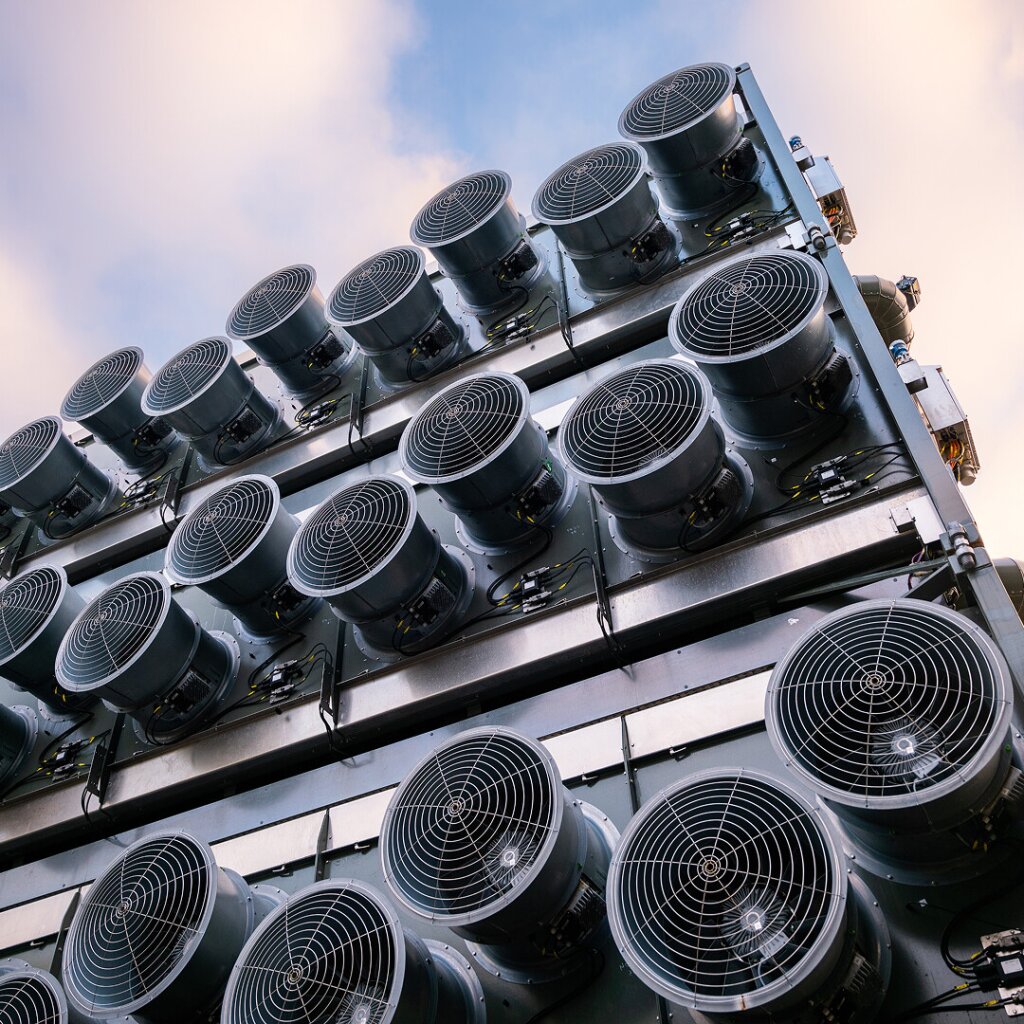. [Dive deeper into our technology](https://climeworks.com/highly-scalable-direct-air-capture). . . . . . .svg). * [Carbon removal solutions](https://climeworks.com/carbon-removal-solutions). * [Tailored portfolios](https://climeworks.com/tailored-carbon-removal-portfolios). * [Resources](https://climeworks.com/resources). * [Direct Air Capture technology](https://climeworks.com/direct-air-capture). * [Technology deep-dive](https://climeworks.com/highly-scalable-direct-air-capture). * [Projects](https://climeworks.com/projects). * [About us](https://climeworks.com/journey). * [Newsroom](https://climeworks.com/newsroom). * [Leadership](https://climeworks.com/leadership). * [Careers](https://climeworks.com/careers). * [Sustainability](https://climeworks.com/sustainability). * [Contact](https://climeworks.com/contact). * [Terms of use](https://climeworks.com/website-terms-use). * [Terms of use](https://climeworks.com/website-terms-use).

O
oceanacidification.noaa.gov
official
https://oceanacidification.noaa.gov/carbon-dioxide-removal/
The scale, timing, and approach to carbon removal determines how effective it is at mitigating ocean acidification. NOAA has demonstrated expertise and assets to address many unknowns around the potential of ocean acidification mitigation by CDR. A new technical report published by the Fisheries and Ocean Canada and NOAA summarizes our knowledge gaps regarding the potential of blue carbon to mitigate coastal ocean acidification in shared waters. NOAA Library Seminars presents a research update around the efficacy of wastewater ocean alkalinity enhancement (OAE) for mitigating local ocean and coastal acidification. The NOAA Ocean Acidification Program exists to meet the ocean acidification research and monitoring needs of the U.S. See how you can get involved to serve your community and participate in cutting-edge research and education and outreach. Through work funded by NOAA’s Ocean Acidification Program, the Pacific Marine Environmental Laboratory developed a model capable of depicting past ocean chemistry conditions for the Bering Sea and is now testing the ability of this model to forecast future conditions.

E
energy.gov
official
https://www.energy.gov/science/doe-explainsdirect-air-capture
# DOE Explains...Direct Air Capture. The Department of Energy’s Regional Direct Air Capture Hubs program will develop four domestic direct air capture hubs to demonstrate a direct air capture technology or suite of technologies at a commercial scale. The Department of Energy’s Regional Direct Air Capture Hubs program will develop four domestic direct air capture hubs to demonstrate a direct air capture technology or suite of technologies at a commercial scale. **Direct air capture** technology is a form of carbon dioxide (CO2) removal that takes CO2 from ambient, or still, air. ## DOE Office of Science: Contributions to Direct Air Capture. DOE supports direct air capture research, development, and demonstration through the Offices of Fossil Energy and Carbon Management and Clean Energy Demonstrations and the Advanced Research Projects Agency–Energy. DOE also supports research on direct air capture through the Office of Science Basic Energy Sciences (BES) and Biological and Environmental Research (BER) programs.